
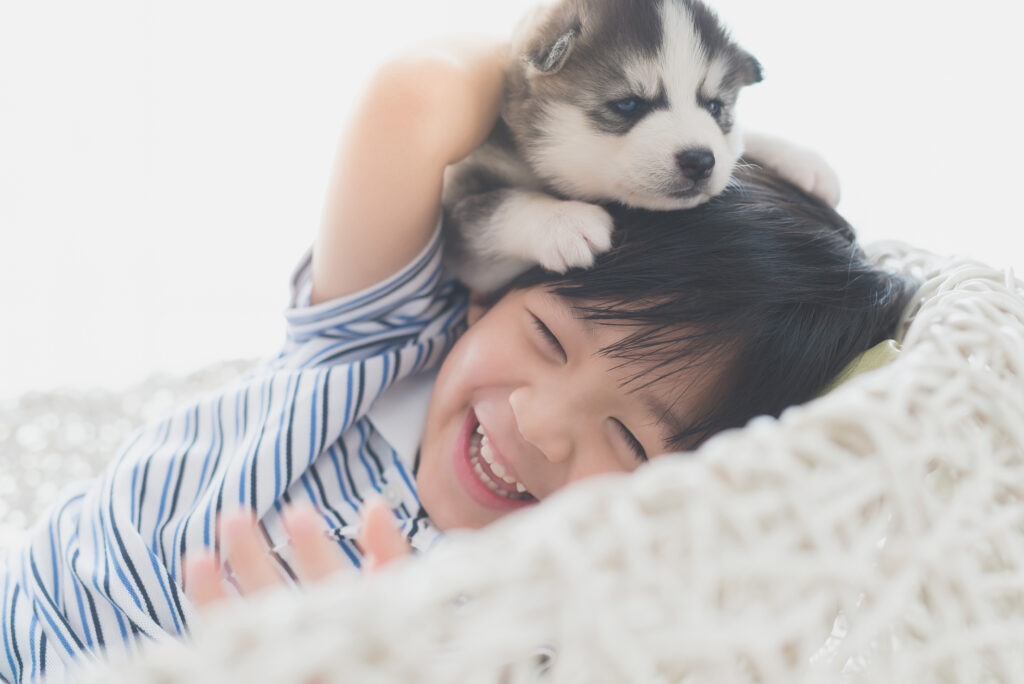
Bringing a pet into your family has many advantages for the growth and development of healthy children – physically, emotionally, and mentally. Having another creature to observe, play with, and care for can significantly improve your kids’ chances of growing into well-rounded and happy adults. However, introducing pets into the family home comes with immense responsibility and should not be done lightly. Keeping a pet takes a lot of work and provides many teaching opportunities for children to learn more about the world. Here are ten lessons that having a pet will help to impart upon your kids.
1. Pets Are Living Beings
Just like people, animals are living creatures that deserve respect. They may not speak your language or behave the way you do, but their lives are valuable and worthy of care. Teaching your children to understand that can be difficult, but these lessons become clearer with a pet. For example, with a fish, you can see that tapping on the glass of its aquarium makes it unhappy. If you try to touch a cat against its will, it might try to scratch you. Living beings, humans included, have boundaries and rights. A family pet can highlight this for your children before they set out for the real world.
2. Their Health Matters
The well-being of your pet, no matter what species it is, will be your and your family’s responsibility. Teaching your children about maintaining good health through your pet can make the lesson clearer and simpler. Showing your children how to take care of a pet, such as by getting it checked with a local vet clinic, can help them understand the importance of not only their pet’s health but their own too.
3. Pets Require Fitness
Similar to the last point, your pet’s physical fitness can encourage your children to keep active as well. While a hamster might only need a wheel in its cage to provide an opportunity for exercise, other animals such as a dog demand regular walks and active playtime. Get your children involved by going to the dog park with them and encouraging them to walk the dog. If your children are at an appropriate age and it is safe to do so, allowing them to take responsibility for walking the dog can help them feel valued and more mature.
4. Animals Have Different Diets
Depending on the kind of pet you bring home, what you need to feed it will vary greatly. Exotic pets like snakes might require you to keep frozen mice, whereas a rabbit can share your lettuce. The opportunity here is to teach your children about what different animals need to survive and why these differences are interesting. Some pets are carnivores, omnivores, or herbivores, and making sure your pet’s nutritional needs are met can be a useful tool for teaching. For example, there are some human foods that are deadly to cats or dogs, and your children should be careful not to accidentally make those mistakes.
5. Enrichment and Quality of Life
In the same way that children need creative outlets and stimulation, your pet will need enrichment. Small pets like hamsters, mice, rats, and other rodents should have enough space according to their respective sizes and appropriate toys to play with. Engaging your children and showing them how to play with their pets can help them learn how to interact carefully and respectfully with animals. This can be particularly valuable for children without siblings since playing and sharing are important lessons for everyone to learn.
6. Safety and Handling
The safe and proper handling of your pets is something dads much teach their children before they can interact with the animal one-on-one. Dogs and cats can bite and scratch, small rodents can be easily dropped or squashed. Show your kids how to gently handle their pets, so they don’t hurt themselves or the animal. It’s important to research the type and breed of your pet in case there are specific temperaments associated with them. For example, certain dog breeds are considered more dangerous than others and therefore shouldn’t be left alone with children.
7. Grooming and Hygiene
Some pets will need you to help keep them clean. This might involve replacing the bedding in their cage once a week or cleaning their litter tray. Pets with long fur should be brushed to prevent painful matting, and if your pet is prone to messy misadventures, then the occasional bath might be in order. Give your kids the opportunity to take responsibility for some of these tasks to help them learn more about the grooming habits and needs of different animals.
8. Routines and Travel
Keeping a pet sometimes means making special arrangements for travel. Some animals can travel with you while others are best left at home. Either way, it’s important that your children know what works for their pets. Have them organize feeding arrangements for the cat while you are out of town for the weekend, or show them how to look after the dog while using transport. Having something to look after while traveling teaches children about spatial awareness and the importance of not being forgetful or irresponsible.
9. Space, Enclosures, and Confinement
Ask your kids what kind of environment they think would best suit their pet and see if they’re right. Do they think rabbits should be able to run around the whole house? Is the fish tank too big or too small? The amount of space your pets need to feel comfortable is important to their mental and physical health. By catering to these needs, you are demonstrating to your children that not all solutions fit all problems and that what might be comfortable for one pet could be dangerously unsuitable for another.
10. Loyalty and Compassion
Kindness is one of the most important lessons that owning a pet can teach your children. The love and happiness a pet shares with its family will create lasting memories and help your kids grow up to be compassionate and kind.
